

What is the Tensile Strength of P84 Filter Bag?
As a reliable supplier of P84 filter bags, I often encounter inquiries regarding the tensile strength of these essential filtration components. Understanding the tensile strength of P84 filter bags is crucial for evaluating their performance, durability, and suitability for various industrial applications. In this blog post, I will delve into the concept of tensile strength, explore the factors that influence the tensile strength of P84 filter bags, and discuss its significance in real - world scenarios.
Understanding Tensile Strength
Tensile strength is a fundamental mechanical property that measures the maximum amount of tensile (pulling) stress a material can withstand before breaking. In the context of P84 filter bags, tensile strength is a key indicator of their ability to resist tearing or rupture under the forces exerted during normal operation, such as the pressure of the gas flow, the weight of the collected dust, and the mechanical stress from cleaning processes.
The tensile strength of a P84 filter bag is typically expressed in units of force per unit area, such as Newtons per square millimeter (N/mm²) or pounds per square inch (psi). A higher tensile strength indicates that the filter bag can withstand greater pulling forces without failing, which is essential for ensuring long - term reliability and performance in demanding industrial environments.
Factors Affecting the Tensile Strength of P84 Filter Bags
Several factors can influence the tensile strength of P84 filter bags. These include:
- Fiber Quality and Composition: The quality and composition of the P84 fibers used in the filter bag play a significant role in determining its tensile strength. High - quality P84 fibers with consistent diameter, length, and chemical properties are more likely to result in filter bags with superior tensile strength. Additionally, the blend of fibers, if any, can also affect the overall mechanical properties of the filter bag. For example, some P84 filter bags may be blended with other fibers to enhance specific performance characteristics, but this can also impact the tensile strength.
- Fabric Structure and Weave Pattern: The fabric structure and weave pattern of the P84 filter bag can have a profound effect on its tensile strength. Different weave patterns, such as plain weave, twill weave, or satin weave, distribute the stress differently across the fabric. A well - designed weave pattern can help to evenly distribute the pulling forces, thereby increasing the overall tensile strength of the filter bag. Moreover, the tightness of the weave and the density of the fibers in the fabric also contribute to the bag's ability to resist tearing.
- Finishing Treatments: Finishing treatments applied to the P84 filter bag, such as heat setting, calendering, or coating, can improve its tensile strength. Heat setting, for instance, can help to stabilize the fiber structure and reduce shrinkage, which in turn enhances the bag's dimensional stability and tensile properties. Coatings can also provide an additional layer of protection and reinforcement, increasing the bag's resistance to abrasion and mechanical stress.
- Manufacturing Process: The manufacturing process of the P84 filter bag is another critical factor that affects its tensile strength. Precise control of parameters such as temperature, pressure, and tension during the weaving, sewing, and assembly processes is essential for ensuring consistent quality and optimal mechanical properties. Any deviations in the manufacturing process can lead to weak spots in the filter bag, reducing its overall tensile strength.
Significance of Tensile Strength in Industrial Applications
The tensile strength of P84 filter bags is of utmost importance in a wide range of industrial applications, including:
- Dust Collection Systems: In dust collection systems, P84 filter bags are used to capture and remove particulate matter from industrial gases. These bags are subjected to continuous gas flow, which exerts a pulling force on the bag. A filter bag with low tensile strength may tear or rupture under this force, allowing dust to escape into the environment and reducing the efficiency of the dust collection system. On the other hand, a filter bag with high tensile strength can withstand the gas flow and maintain its integrity, ensuring effective dust collection over an extended period.
- High - Temperature Environments: P84 filter bags are often used in high - temperature applications, such as in cement plants, power generation facilities, and steel mills. In these environments, the filter bags are exposed to elevated temperatures, which can cause the fibers to become more brittle and reduce their tensile strength. A filter bag with sufficient tensile strength can better withstand the thermal stress and mechanical forces associated with high - temperature operation, preventing premature failure and ensuring reliable performance.
- Pulse - Jet Cleaning Systems: Many dust collection systems use pulse - jet cleaning to remove the accumulated dust from the filter bags. During the pulse - jet cleaning process, a high - pressure burst of air is used to dislodge the dust from the bag surface. This sudden change in pressure can generate significant mechanical stress on the filter bag. A filter bag with high tensile strength can resist the stress caused by the pulse - jet cleaning, minimizing the risk of damage and extending the service life of the bag.
Comparing P84 Filter Bags with Other Filter Bag Types
When considering the tensile strength of P84 filter bags, it is also useful to compare them with other types of filter bags, such as Aramid Filter Bag and Folded And Pleated Bag.
Aramid filter bags are known for their high strength and heat resistance. They typically have a very high tensile strength, which makes them suitable for applications where extreme mechanical stress and high temperatures are involved. However, aramid filter bags can be more expensive than P84 filter bags.
Folded and pleated bags offer a larger filtration area in a smaller space, which can improve the efficiency of the dust collection system. The tensile strength of folded and pleated bags depends on the material used and the design of the folds. While they can provide good filtration performance, their tensile strength may be different from that of P84 filter bags, depending on the specific application requirements.
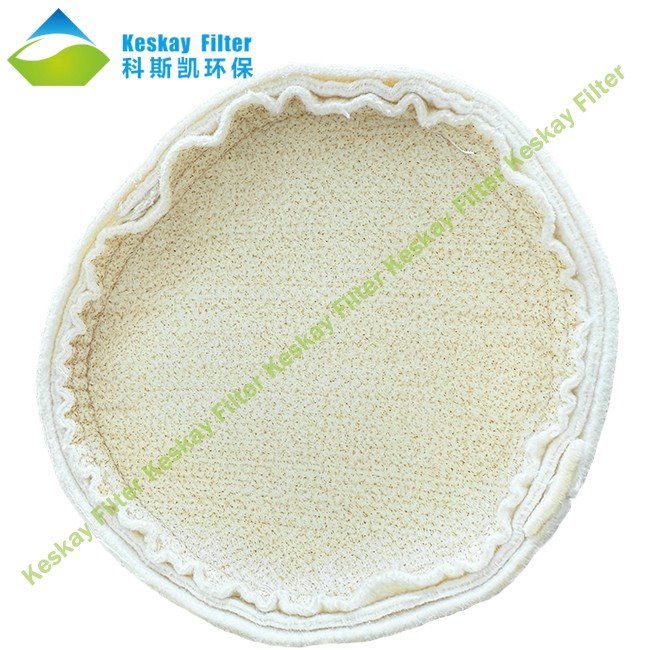

In general, P84 filter bags offer a good balance of tensile strength, chemical resistance, and high - temperature performance at a relatively reasonable cost. This makes them a popular choice for many industrial applications.
Measuring the Tensile Strength of P84 Filter Bags
The tensile strength of P84 filter bags is typically measured using standardized testing methods. One common method is the ASTM D5034 standard, which specifies the procedure for measuring the breaking strength and elongation of textile fabrics. In this test, a sample of the filter bag fabric is cut into a specific shape and size, and then it is subjected to a gradually increasing pulling force until it breaks. The maximum force applied at the point of breakage is recorded, and the tensile strength is calculated based on the cross - sectional area of the sample.
It is important to note that the tensile strength values obtained from these tests are representative of the fabric under ideal laboratory conditions. In real - world applications, the actual tensile strength of the filter bag may be affected by factors such as environmental conditions, installation methods, and the presence of contaminants.
Ensuring Optimal Tensile Strength in P84 Filter Bags
As a P84 filter bag supplier, we take several steps to ensure that our filter bags have optimal tensile strength. These include:
- Quality Control: We source high - quality P84 fibers from reliable suppliers and conduct strict quality control checks on the raw materials. This helps to ensure that the fibers meet the required specifications and have consistent mechanical properties.
- Advanced Manufacturing Techniques: We use advanced manufacturing techniques and state - of - the - art equipment to produce our P84 filter bags. Our manufacturing processes are carefully monitored and controlled to ensure that the filter bags are produced with the correct fabric structure, weave pattern, and finishing treatments, all of which contribute to optimal tensile strength.
- Testing and Certification: Before our P84 filter bags are shipped to customers, they undergo rigorous testing to ensure that they meet or exceed the required tensile strength standards. We also provide certification documents to our customers, which confirm the quality and performance of our filter bags.
Conclusion
In conclusion, the tensile strength of P84 filter bags is a critical property that determines their performance, durability, and suitability for various industrial applications. By understanding the factors that affect the tensile strength, comparing P84 filter bags with other types of filter bags, and ensuring optimal manufacturing processes, we can provide high - quality P84 filter bags that meet the demanding requirements of our customers.
If you are in need of P84 filter bags for your industrial application, we invite you to contact us to discuss your specific needs. Our team of experts is ready to provide you with detailed information, technical support, and competitive pricing. We look forward to working with you to find the best filtration solution for your business.
References
- ASTM International. (2019). ASTM D5034 - 19: Standard Test Method for Breaking Strength and Elongation of Textile Fabrics (Grab Test).
- Industrial Filtration Handbook. (2020). Various chapters on filter bag materials and performance.