


The basic material of dust filter cloth is fiber. The main types used are synthetic fibers and inorganic fibers, while polyester filter materials are mainly made of synthetic fibers. Our company uses short fibers, which have the advantage of being more uniform during the needle-punching process, resulting in lower deformation rates of the finished products and better dimensional stability. Polyester fibers have excellent physical and chemical properties with a high initial modulus. Their products have good dimensional stability, do not shrink, and have better heat resistance than other common synthetic fibers. However, this fiber has poor moisture absorption and is prone to accumulating static electricity during processing and use. Polyester fibers are stable in dilute acid and alkali solutions at room temperature, but their stability tends to decrease with increasing temperature. Therefore, the normal service life of polyester is related to temperature and humidity. Its hydrolysis resistance is poor, and it may undergo hydrolysis and bagging when exposed to high humidity and temperature conditions, especially in the presence of certain acids and alkalis. The filter cloth's dimensions are established by the client and are cut appropriately.
Applications
- Thermal Power Generation: Used for flue gas dust removal in coal-fired boilers and electrostatic precipitator auxiliary filtration systems, adapting to low-to-medium temperature (≤130℃) dust conditions.
- Cement Manufacturing: Applied in raw material crushing, cement grinding, and silo top dust control, suitable for filtering dry, non-corrosive cement dust.
- Iron and Steel Auxiliary Processes: Utilized in dust removal of ironmaking auxiliary facilities, steel rolling workshops, and scrap handling systems-targeting low-temperature, non-sticky dust.
- Food Processing: Suitable for dust filtration in grain drying, flour milling, starch production, and feed processing lines, complying with food-grade hygiene requirements.
- Textile Industry: Used for dust removal in spinning, weaving, and dyeing workshops, capturing fiber dust and lint without secondary pollution.
- Wood Processing: Applied in dust collection systems of sawmills, furniture factories, and woodworking workshops, filtering wood chips and sawdust.
- Building Materials Industry: Utilized in dust control of gypsum board production, ceramic raw material processing, and glass manufacturing auxiliary processes.
- Chemical Industry (Mild Conditions): Suitable for dust removal in non-corrosive chemical material mixing, packaging, and conveying processes (avoiding strong acids/alkalis).
- Wastewater Treatment: Used as filter media in sewage treatment plants' solid-liquid separation systems, such as sludge dewatering filter bags.
- Mining & Quarrying: Applied in dust filtration during ore crushing, screening, and conveying processes, withstanding wear from dry mineral dust.
- Pharmaceutical Industry (Non-corrosive): Utilized for dust control in non-chemically aggressive drug powder mixing and packaging workshops.
- Feed Production: Suitable for dust removal in feed raw material crushing, mixing, and granulation processes.
Workshop
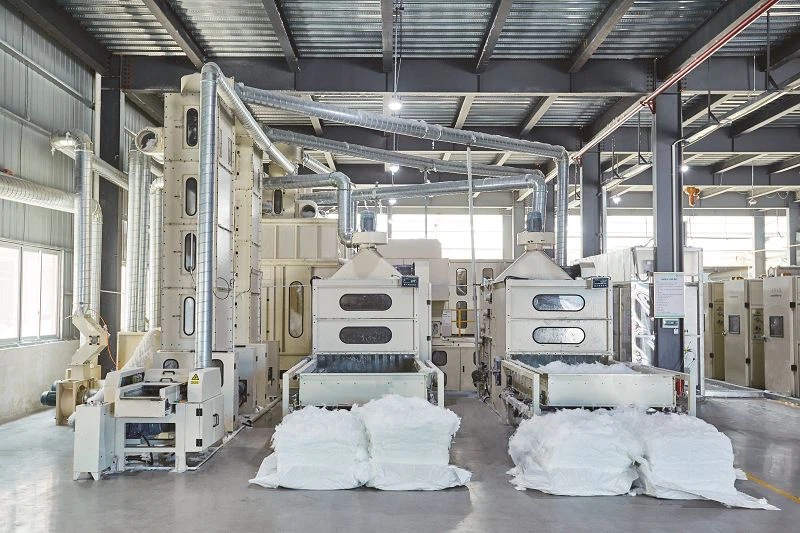
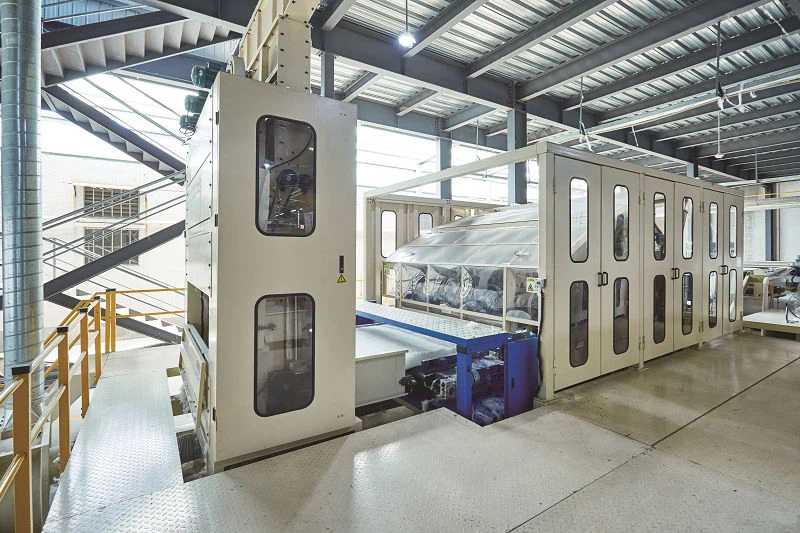
Filter Material Workshop
The Filter Material Workshop has established a full-process quality control system and is equipped with advanced intelligent filter material testing instruments to conduct real-time monitoring of filter materials during the production process. The testing items cover key indicators such as air permeability, filtration precision, breaking strength, and elongation. The sampling inspection rate for each batch of products is not less than 8%, and the testing standards not only comply with relevant national regulations but also are higher than the enterprise's self-control standards which are above the industry average level, ensuring the stable and reliable quality of the filter materials leaving the factory.
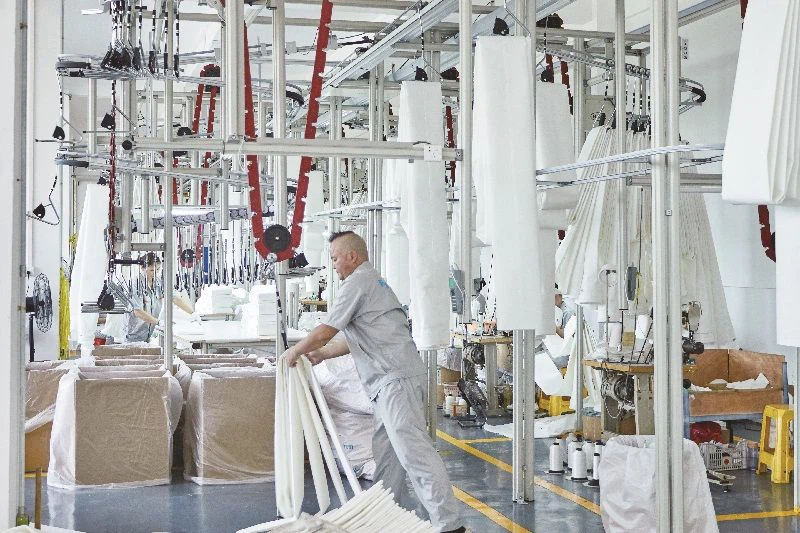
Bag Workshop
The workshop closely collaborates with upstream raw material suppliers and the filter material production link, and matches exclusive raw material processes for different types of filter bags. When producing PPS high-temperature filter bags, high-quality fiber raw materials from well-known suppliers such as DuPont are used, combined with the high-temperature needle-punching process of the Filter Material Workshop; when manufacturing PTFE acid and alkali resistant filter bags, the supporting raw materials for the laminating production line are used. Through precise raw material-process matching, the performance of filter bags is maximized.
Bag Cage Workshop
The workshop has a professional technical R&D team that continuously promotes the technological upgrading of skeleton production. In recent years, the team has successfully developed the "lightweight and high-strength skeleton". By optimizing the skeleton structure design (such as using hollow rods instead of solid rods), it reduces the skeleton weight by 20% on the premise of ensuring load-bearing performance, lowering transportation and installation costs; at the same time, it has developed the "quick disassembly and assembly skeleton". Through modular design, it shortens the on-site installation time by 50%, improving the convenience of customer use. The technological innovation achievements have obtained a number of utility model patents.



Enterprise honor
The linkage between 18 invention patents and high-tech product certifications demonstratesKeskay Filter's virtuous cycle of "R&D - Transformation - Recognition". The enterprise quickly integrates patented technologies into product design and verifies the value of achievements through authoritative certifications, forming a development model where technological innovation and market recognition promote each other.

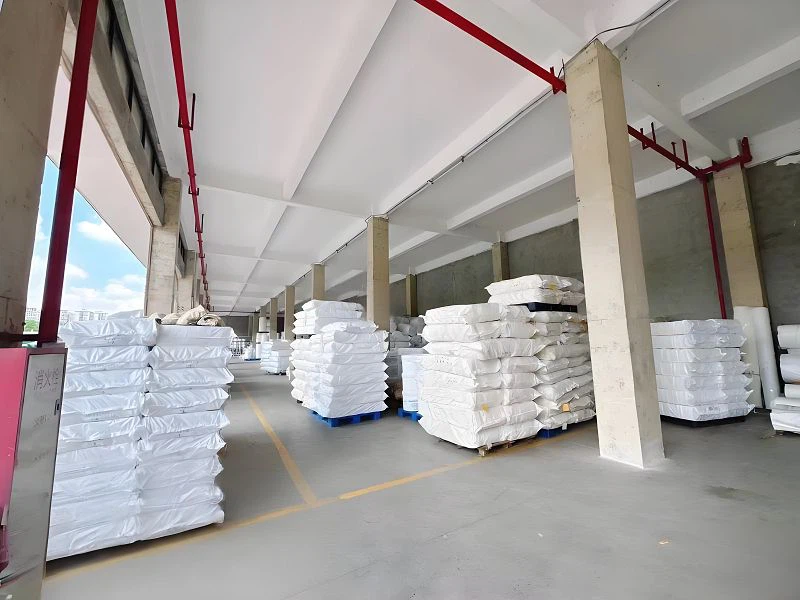
Package
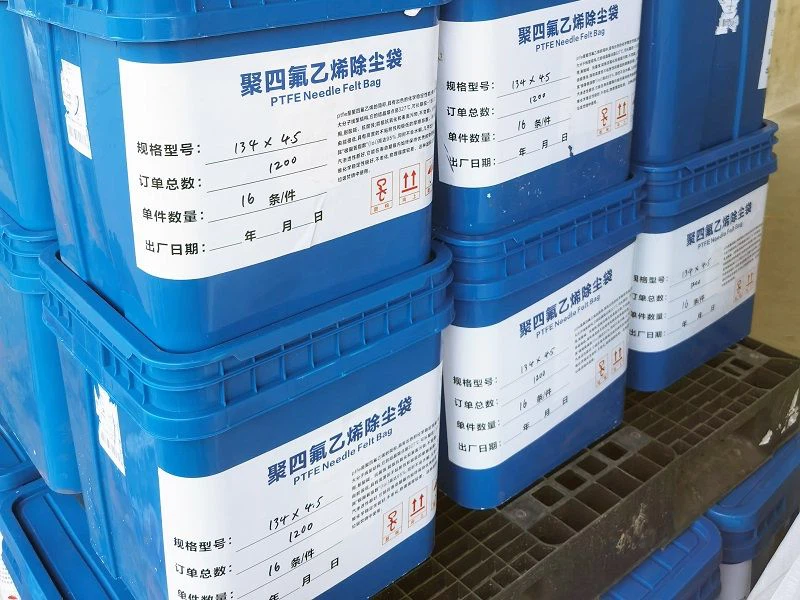
Safety protection is the core mission of packaging. Dust filter bags and cages are precision components, which are easily damaged by moisture, extrusion, scratches and deformation. Therefore, we have established a comprehensive packaging safety protection system to fully protect product safety from three aspects: material, structure and operation, ensuring that the product quality is not affected by packaging problems, and indirectly ensuring the dust removal efficiency of the subsequent equipment.
In terms of materials, we select high-specification pressure-resistant, moisture-proof, scratch-proof and corrosion-proof packaging materials to eliminate product damage caused by material problems; in terms of structure, the filter bag adopts a three-layer protection structure, and the cage adopts a fixed + buffer structure to fully resist external extrusion, collision and moisture erosion, preventing filter bags from getting damp and cages from deforming; in terms of operation, professional packaging personnel operate in strict accordance with specifications, accurately control the packaging force, avoid product damage caused by over-tight or over-loose packaging, and each batch of finished products undergoes multiple inspections to ensure that the protection is in place. Whether it is warehousing stacking, long-distance transportation or short-distance handling, our packaging can provide reliable safety protection for products.


Transportation
Product quality is the foundation of our development, and ensuring the integrity of products during transportation is an important part of our quality commitment. We deeply understand that the safe delivery of products is related to the normal production of customers, so we have established a full-process product protection system during transportation, and promise that every batch of products will be delivered to the customer's site intact.
We strictly select cooperative logistics companies with rich experience in transporting industrial parts, which have professional transportation equipment and standardized operation processes, and can provide targeted transportation protection for filter bags and cages. For long-distance transportation, we use closed transport vehicles to avoid product dampness, dust pollution and damage caused by bad weather; for fragile and easily deformed cage products, we adopt additional fixing measures, use professional fixing tools to fix the cages firmly, and lay buffer materials between the products to reduce collision damage. During the transportation process, we arrange special personnel to track the transportation status in real time, timely feedback the vehicle dynamics to the customer, and handle various unexpected situations in a timely manner. We promise that if the product is damaged due to transportation problems, we will provide free replacement services to fully protect the customer's rights and interests.

Hot Tags: nonwoven polyester fabric, China nonwoven polyester fabric manufacturers, suppliers, factory, bulk fiberglass cloth, fiberglass fabric, Fiberglass Fabric Cloth, Polyimide Nonwoven Fabric, PPS Cloth, ptfe laminated fabric