

Aramid filter bags are widely recognized for their exceptional performance in various industrial filtration applications. As a leading supplier of Aramid filter bags, I understand the importance of adhering to strict quality standards to ensure the reliability and efficiency of these products. In this blog post, I will delve into the key quality standards for Aramid filter bags, shedding light on the factors that contribute to their effectiveness and durability.
Material Quality
The foundation of a high - quality Aramid filter bag lies in the material used. Aramid fibers are known for their excellent heat resistance, chemical resistance, and high strength. When sourcing Aramid fibers for filter bag production, we focus on the following aspects:
Fiber Purity
The purity of Aramid fibers is crucial. Impurities in the fibers can weaken the overall structure of the filter bag and reduce its filtration efficiency. We work with trusted fiber suppliers who ensure that the Aramid fibers meet the highest purity standards. This purity not only enhances the mechanical properties of the filter bag but also helps in maintaining a consistent filtration performance over time.
Fiber Diameter and Length
The diameter and length of Aramid fibers play a significant role in determining the filter bag's performance. Fibers with a uniform diameter ensure a more consistent pore size distribution in the filter media, which is essential for efficient particle capture. Similarly, appropriate fiber length contributes to the strength and integrity of the filter bag. We carefully select fibers with the optimal diameter and length to achieve the best balance between filtration efficiency and mechanical strength.
Manufacturing Process
The manufacturing process of Aramid filter bags is another critical factor that affects their quality. At our production facility, we follow strict manufacturing protocols to ensure that each filter bag meets the required standards.
Weaving and Needling
The weaving or needling process used to create the filter media is carefully controlled. In weaving, the pattern and tightness of the weave are adjusted to achieve the desired porosity and strength. Needling, on the other hand, involves entangling the fibers to form a non - woven structure. We use advanced weaving and needling machines to ensure precision and consistency in the manufacturing process. This results in filter bags with a uniform structure and reliable filtration performance.
Seaming and Finishing
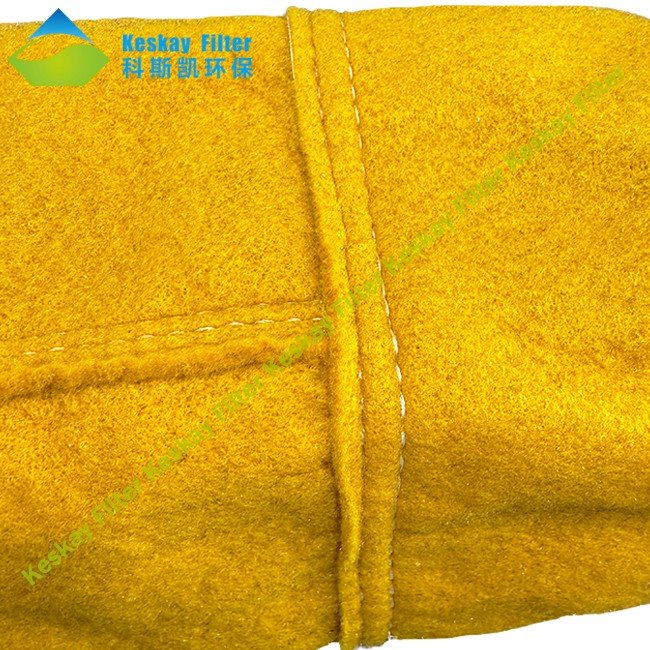
Proper seaming is essential to prevent leakage and ensure the structural integrity of the filter bag. We use high - quality sewing threads and advanced seaming techniques to create strong and durable seams. Additionally, the finishing process, which may include treatments such as heat setting and coating, is carefully carried out to enhance the filter bag's performance. Heat setting helps to stabilize the structure of the filter media, while coatings can improve the filter bag's chemical resistance and dust release properties.
Filtration Efficiency
One of the primary functions of an Aramid filter bag is to capture and remove particulate matter from gas streams. Therefore, filtration efficiency is a key quality standard that we focus on.
Particle Capture Efficiency
We test our Aramid filter bags to determine their particle capture efficiency at different particle sizes. This is typically measured using standardized test methods, such as the fractional efficiency test. Our filter bags are designed to achieve high capture efficiencies for a wide range of particle sizes, from fine dust to larger particles. This ensures that they can effectively remove pollutants from industrial gas streams, protecting the environment and the health of workers.
Dust Holding Capacity
In addition to particle capture efficiency, the dust holding capacity of the filter bag is also important. A filter bag with a high dust holding capacity can operate for longer periods between cleanings, reducing downtime and maintenance costs. We design our Aramid filter bags to have a large dust holding capacity by optimizing the pore structure and surface properties of the filter media.
Chemical and Thermal Resistance
Aramid filter bags are often used in harsh industrial environments where they are exposed to chemicals and high temperatures. Therefore, chemical and thermal resistance are crucial quality standards.
Chemical Resistance
We test our Aramid filter bags for their resistance to various chemicals, including acids, alkalis, and solvents. Our filter bags are designed to withstand the corrosive effects of these chemicals, ensuring their long - term performance in chemical - laden gas streams. This chemical resistance is achieved through the selection of appropriate Aramid fibers and the application of protective coatings.
Thermal Resistance
Aramid fibers are known for their excellent thermal resistance. Our Aramid filter bags can withstand high temperatures without significant degradation of their mechanical and filtration properties. We specify the maximum operating temperature for our filter bags based on rigorous testing, ensuring that they can be safely used in high - temperature applications such as incinerators and cement kilns.
Physical Properties
The physical properties of Aramid filter bags, such as strength, flexibility, and abrasion resistance, also contribute to their overall quality.
Tensile Strength
Tensile strength is an important physical property that determines the filter bag's ability to withstand the mechanical stresses during installation and operation. We test the tensile strength of our Aramid filter bags in both the warp and weft directions to ensure that they meet the required standards. High tensile strength ensures that the filter bags can be easily installed and will not tear or break under normal operating conditions.
Flexibility
Flexibility is essential for the proper functioning of Aramid filter bags, especially in applications where the filter bags need to be bent or folded. Our filter bags are designed to have sufficient flexibility to allow for easy installation and movement within the dust collector. This flexibility also helps to prevent damage to the filter bags during cleaning cycles.
Abrasion Resistance
In industrial environments, filter bags may be exposed to abrasive particles and moving parts. Therefore, abrasion resistance is a critical quality standard. We use special treatments and fiber selections to enhance the abrasion resistance of our Aramid filter bags, ensuring their long - term durability in abrasive environments.
Comparison with Other Filter Bags
It's worth comparing Aramid filter bags with other types of filter bags, such as Liquid Filter Bag, Antistatic Filter Bag, and P84 Filter Bag. While each type of filter bag has its own unique advantages, Aramid filter bags stand out for their combination of high - temperature resistance, chemical resistance, and mechanical strength. Liquid filter bags are mainly used for liquid filtration applications, while antistatic filter bags are designed to prevent electrostatic discharge. P84 filter bags are known for their high filtration efficiency, but Aramid filter bags offer better thermal and chemical resistance in many cases.

Conclusion
As a supplier of Aramid filter bags, we are committed to meeting the highest quality standards. By focusing on material quality, manufacturing process, filtration efficiency, chemical and thermal resistance, and physical properties, we ensure that our Aramid filter bags provide reliable and efficient filtration solutions for various industrial applications. If you are in the market for high - quality Aramid filter bags, I encourage you to contact us for more information and to discuss your specific requirements. We look forward to the opportunity to work with you and provide you with the best filtration products.
References
- ASTM International. (20XX). Standard test methods for filtration media.
- ISO Standards. (20XX). Quality management systems for industrial products.
- Industrial Filtration Handbook. (20XX). A comprehensive guide to filtration technologies.