


A filter bag cage (or filter cage) is a structural support frame that ensures proper bag shape, prevents collapse during pulse-jet cleaning, and extends filter bag life. A well-designed filter bag cage significantly improves bag lifespan, cleaning efficiency, and system performance. Material selection depends on temperature, corrosion risk, and dust type, while proper maintenance prevents premature failure.
Technical Parameter
|
GUANGDONG KESKAY ENVIRONMENTAL PROTECTION TECHNOLOGY CO.,LTD. |
|
|
Name |
Skeleton (bag cage) |
|
Raw material |
Q235 carbon steel, galvanized, stainless steel (201, 304, 316, 316L) |
|
Spraying method |
Silicone electrostatic spraying |
|
Skeleton diameter |
φ100-φ200mm |
|
Skeleton length |
0.5-10m (customization) |
|
Skeleton reinforcement |
φ3.2-4.0mm |
|
Number of skeleton ribs |
8, 10, 12, 14, 16, 20, 24 |
|
Horizontal ring pitch |
150-200mm |
|
Section number |
1-4 |
|
Venturi(protective sleeve) |
Optional (conjoined protective cover,blinds,straight-through) |
Why the filter bag cage is essential?
1. Maintains Bag Shape – Prevents bag sagging or wrinkling
2. Enhances Cleaning Efficiency – Ensures even dust release during pulsing
3. Reduces Wear & Tear – Protects bags from mechanical stress
4. Improves Airflow – Optimizes filtration performance
Applications
- Power Generation Industry:Used as support skeletons for dust collector filter bags in coal-fired power plants (boiler flue gas dust removal), biomass power plants, and waste-to-energy facilities. SS 304/316 variants are preferred for high-temperature (up to 260℃) and corrosive flue gas environments (containing SO₂, NOₓ, or moisture), while SS 201/301 suits low-corrosion, ambient-temperature dust removal systems. Ensures filter bag structural stability during pulse jet cleaning, maintaining efficient dust filtration.
- Iron & Steel Metallurgy Industry:Applied in dust collector systems for sintering machines, blast furnaces, converters, and steel rolling workshops. Resists corrosion from high-temperature flue gases, iron oxide dust, and acidic/alkaline pollutants. SS 316 is ideal for harsh conditions (e.g., sintering flue gas with high sulfur content), SS 304 for general metallurgical dust removal, and SS 201/301 for auxiliary low-corrosion processes (e.g., scrap handling dust control).
- Cement Manufacturing Industry:Utilized as filter bag support cages in cement kiln heads, kiln tails, and clinker cooler dust collectors. Withstands high temperatures (150-200℃), abrasive cement dust, and moderate humidity. SS 304 offers reliable corrosion resistance for long-term use, while SS 201/301 provides cost-effective solutions for small-scale cement plants or non-critical dust removal sections.
- Chemical & Petrochemical Industry:Employed in dust collectors for chemical reactors, organic synthesis processes, and corrosive material handling (e.g., acid/alkali powder packaging). SS 316 excels in harsh corrosive environments (strong acids, solvents, or saltwater vapor), SS 304 for milder chemical dust, and SS 201/301 for non-corrosive inert dust applications. Ensures filter bag integrity in aggressive chemical atmospheres.
- Waste Incineration & Hazardous Waste Treatment Industry:Critical for dust collector systems in municipal solid waste incineration plants, medical waste treatment facilities, and industrial hazardous waste incinerators. SS 316/304 resists high temperatures (up to 260℃), corrosive flue gases (HCl, SOₓ), and toxic dust, while SS 201/301 is limited to low-temperature, low-corrosion pre-treatment dust removal. Maintains filter bag performance in extreme waste incineration conditions.
- Non-Metallic Mineral Processing Industry:Used in dust collectors for cement, gypsum, limestone, and coal mining/processing plants. Withstands abrasive mineral dust and varying humidity levels. SS 304 is suitable for most mineral processing scenarios, SS 316 for high-humidity or slightly corrosive environments (e.g., gypsum processing), and SS 201/301 for dry, non-abrasive dust applications.
- Asphalt Mixing Industry:Applied in dust collector systems for asphalt mixing stations (drying drums and mixing tanks). Resists high temperatures (120-180℃), asphalt volatiles, and dust adhesion. SS 304 offers optimal balance of heat resistance and corrosion resistance, while SS 201/301 serves as an economical alternative for small-scale or intermittent-operation mixing stations.
- Food Processing & Pharmaceutical Industry:Utilized as support cages for food-grade filter bags in dust collectors for flour mills, starch production lines, and pharmaceutical powder processing workshops. SS 304/316 meets FDA and GMP standards, ensuring non-toxicity, easy cleaning, and resistance to acid/alkaline cleaning agents. Prevents contamination of food/pharmaceutical products during dust removal.
- Automotive & New Energy Industry:Used in dust collectors for automotive paint booths, battery material production (lithium-ion battery cathode/anode powder processing), and EV manufacturing workshops. SS 304/316 resists corrosion from paint mist, battery electrolytes, and industrial cleaning agents, while SS 201/301 suits general automotive component dust control (e.g., metal stamping workshops).
- Marine & Offshore Industry:Employed in dust collectors for shipboard diesel engines, offshore platform power generation systems, and coastal industrial plants. SS 316's excellent saltwater corrosion resistance makes it ideal for marine environments, while SS 304 is used for indoor/offshore dust removal. Prevents rust and structural failure in high-humidity, salt-spray atmospheres.
Workshop
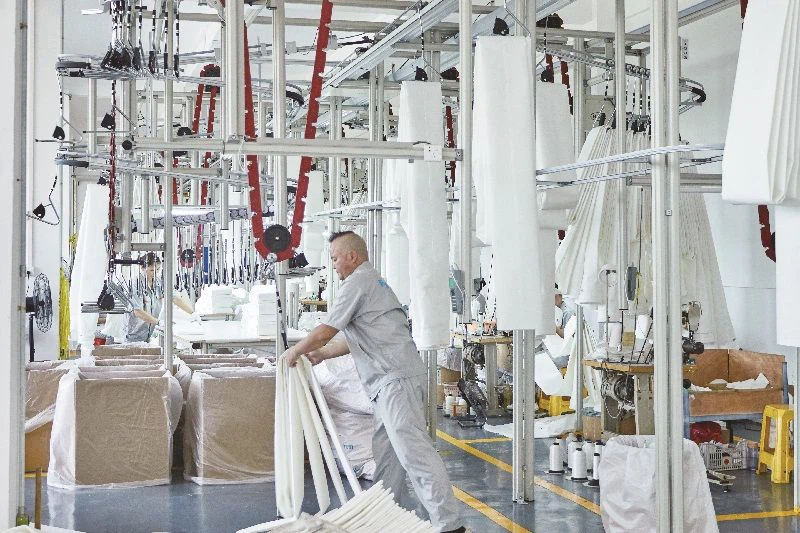
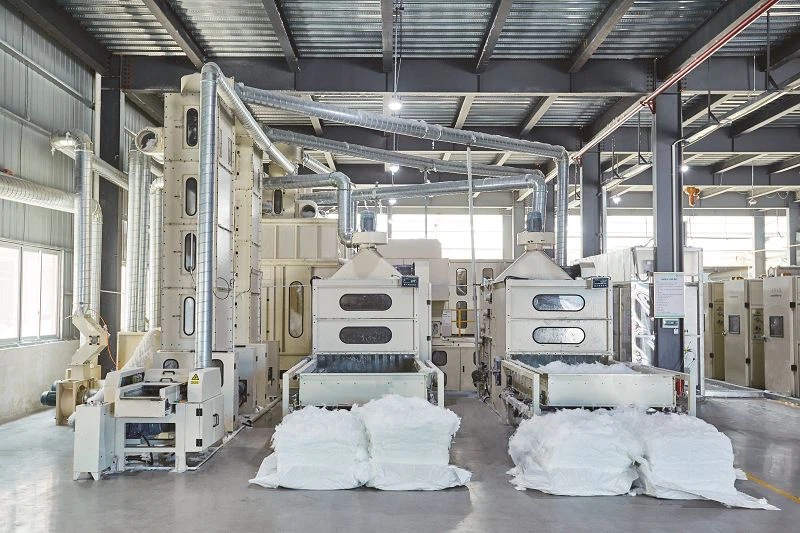
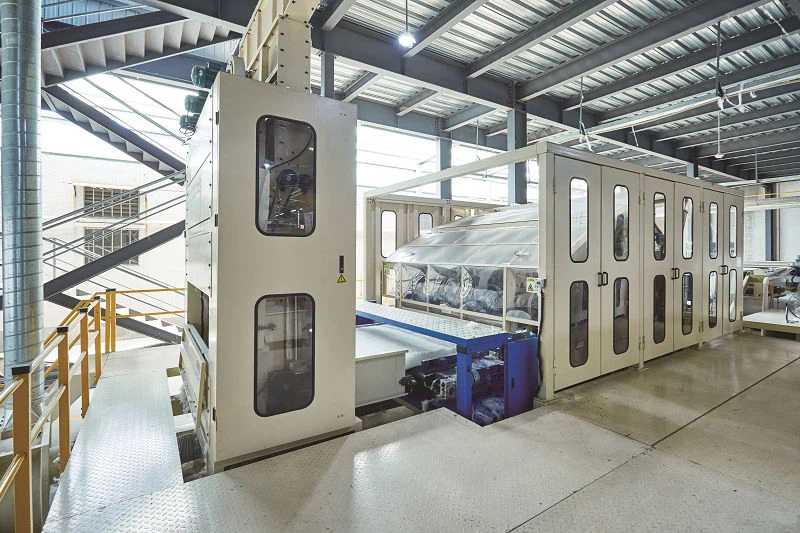
Filter Material Workshop
As the starting point of the enterprise's "filter material - filter bag - skeleton" vertical production chain, the Filter Material Workshop has established a close collaboration mechanism with the Filter Bag Workshop. After the filter materials are produced and pass the inspection, they are directly transported to the Filter Bag Workshop through internal logistics, reducing intermediate transportation links and losses. At the same time, it can flexibly adjust the production specifications and output of filter materials according to the production plan and order requirements of the Filter Bag Workshop, realizing the precise matching of the production rhythms of the two workshops and greatly improving the overall production efficiency of the enterprise.
Bag Workshop
The workshop closely collaborates with upstream raw material suppliers and the filter material production link, and matches exclusive raw material processes for different types of filter bags. When producing PPS high-temperature filter bags, high-quality fiber raw materials from well-known suppliers such as DuPont are used, combined with the high-temperature needle-punching process of the Filter Material Workshop; when manufacturing PTFE acid and alkali resistant filter bags, the supporting raw materials for the laminating production line are used. Through precise raw material-process matching, the performance of filter bags is maximized.
Bag Cage Workshop
As the core hub for bag cage skeleton production, the Skeleton Workshop is equipped with 8 fully automatic bag cage production lines, as well as exclusive production lines for flat bag cages and special-shaped bag cages. It also introduces high-precision wire drawing machines, automatic welding equipment, and assembly line spraying lines. These equipment cover the entire process from metal raw material processing to finished product coating. Among them, the fully automatic welding equipment can achieve precise positioning of welding spots with an error controlled within 0.1mm, and the assembly line spraying line adopts electrostatic spraying technology to ensure coating uniformity and adhesion. The equipment automation level is in a leading position among similar workshops in South China.



Enterprise honor
Behind the honor of being a national-level high-tech enterprise is the enterprise's full-chain strength support from R&D to production. With an annual production capacity of 2 million filter bags and 3 million square meters of needle-punched felt, combined with automated production lines, the enterprise has transformed its technological advantages into industrial advantages, highlighting its leading position in the field of environmental protection filter materials.

Package
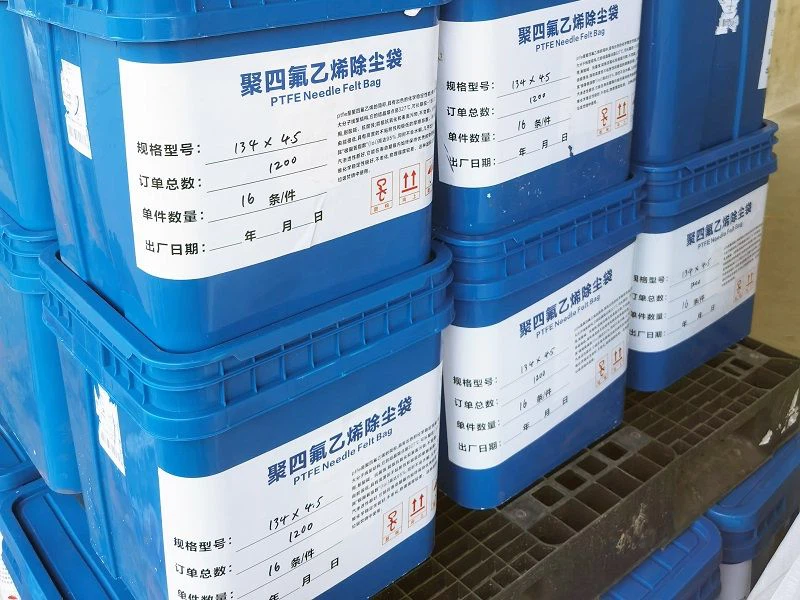
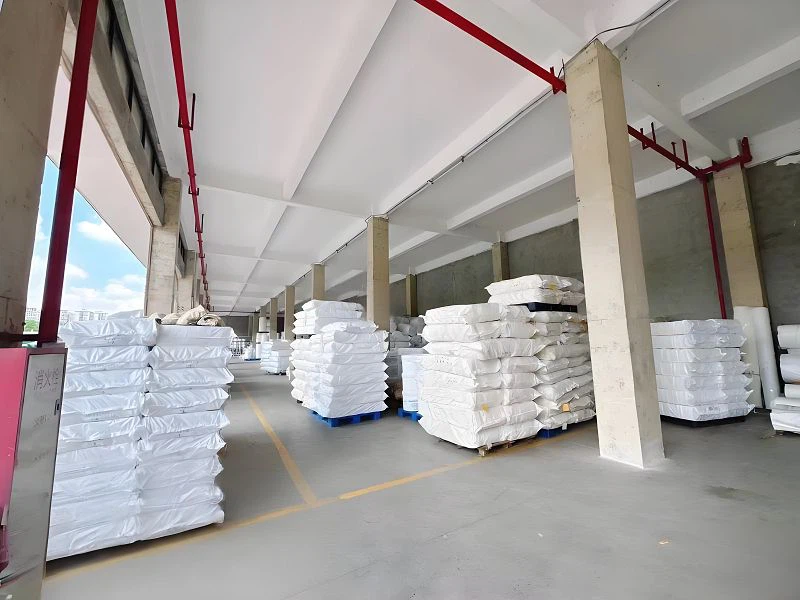
For dust filter bags, we adopt vacuum compression packaging and layered stacking design to reduce the occupied space by 30%-50%, which greatly improves the container loading capacity; for filter cages, we adopt detachable packaging and reasonable placement layout, avoiding space waste caused by irregular placement. Our packaging design fully considers the size of standard containers, ensuring that the loading rate reaches more than 95%, which helps foreign customers reduce transportation costs and improve transportation efficiency.
For filter cages made of metal materials, we adopt anti-rust treatment first, then wrap them with anti-corrosion film, and add desiccant in the packaging box to prevent rust and corrosion caused by moisture. For dust filter bags, we use moisture-proof and breathable packaging materials to avoid mold and mildew caused by moisture accumulation. Our anti-corrosion and anti-moisture packaging can adapt to high humidity, high salt and other harsh environments during sea transportation, ensuring that the products remain intact during transportation.


Transportation
We have signed long-term cooperation agreements with international logistics companies, which can obtain preferential shipping prices, and at the same time optimize the packaging and shipping scheme according to the characteristics of dust filter bags and cages, reduce transportation volume and weight, and further reduce shipping costs. For long-term cooperative foreign customers, we also provide personalized cost reduction plans to achieve win-win cooperation.

Hot Tags: wire cage for ss 201 301 304 316, China wire cage for ss 201 301 304 316 manufacturers, suppliers, factory, classical venturi tube, Galvanized Bag Cage, Irregular Bag Cage, oval filter cage, venturi pipe, zinc plating