

Hey there! As a supplier of antistatic filter bags, I often get asked about what goes into making these nifty little things. So, I thought I'd take a moment to break down the chemical composition of antistatic filter bags for you.
First off, let's talk about why antistatic properties are so important in filter bags. In industrial settings, especially those dealing with dust and fine particles, static electricity can be a real pain. It can cause dust to stick to the filter bags, reducing their efficiency and lifespan. Worse yet, in some cases, static electricity can even lead to explosions or fires if there are flammable dusts in the air. That's where antistatic filter bags come in handy.
Now, onto the chemical composition. Antistatic filter bags are typically made from a combination of different materials, each with its own role to play.
Base Fibers
The base fibers are the backbone of the filter bag. They provide the structure and mechanical strength needed to hold up under the pressure of filtration. There are several types of base fibers commonly used in antistatic filter bags:
Polypropylene (PP)
PP is a popular choice for filter bags because it's cheap, lightweight, and resistant to chemicals. PP Filter Bag made from polypropylene fibers can withstand a wide range of temperatures and are often used in applications where there's a risk of chemical corrosion. Polypropylene is a thermoplastic polymer, which means it can be melted and reshaped multiple times. This property makes it easy to process into fibers for filter bags.
Acrylic
Acrylic fibers are known for their excellent resistance to sunlight, moisture, and chemicals. Acrylic Filter Bag are often used in outdoor applications or in environments where there's a lot of humidity. Acrylic is a synthetic fiber made from acrylonitrile monomers. It has a soft, wool - like feel and is relatively easy to dye, which can be useful for color - coding filter bags.
Needle Felt
Needle felt is a non - woven fabric made by entangling fibers together using barbed needles. Antistatic Composited Needle Felt Filter Bag are highly effective at capturing fine particles. The needle felting process creates a dense, porous structure that provides good filtration efficiency. The fibers used in needle felt can be a combination of different materials, including polypropylene, polyester, and aramid.
Antistatic Agents
To make the filter bags antistatic, antistatic agents are added to the base fibers. These agents work by reducing the surface resistance of the fibers, allowing static charges to dissipate more easily.
Carbon - Based Antistatic Agents
Carbon - based antistatic agents are one of the most common types used in filter bags. Carbon has excellent electrical conductivity, so when it's incorporated into the fibers, it provides a pathway for static charges to flow. Carbon can be added in the form of carbon black or carbon fibers. Carbon black is a fine powder that can be mixed with the polymer during the fiber - making process. Carbon fibers, on the other hand, are stronger and more conductive, but they're also more expensive.
Surfactant - Based Antistatic Agents
Surfactants are another type of antistatic agent. They work by forming a thin, conductive layer on the surface of the fibers. Surfactants have a hydrophilic (water - loving) end and a hydrophobic (water - hating) end. The hydrophilic end attaches to the fiber surface, while the hydrophobic end faces outward, attracting moisture from the air. This moisture layer helps to conduct static charges away from the fibers. Surfactant - based antistatic agents are often used in combination with other agents to enhance their effectiveness.
Binders and Coatings
In addition to the base fibers and antistatic agents, binders and coatings are sometimes used to improve the performance of antistatic filter bags.
Binders
Binders are used to hold the fibers together and improve the mechanical strength of the filter bag. They can also help to prevent the fibers from shedding during use. Common binders include latex, epoxy, and polyurethane. These binders are applied to the filter bag during the manufacturing process and then cured to form a strong bond between the fibers.
Coatings
Coatings can be applied to the surface of the filter bag to improve its filtration efficiency, dust release properties, and chemical resistance. For example, a PTFE (polytetrafluoroethylene) coating can make the filter bag more hydrophobic, preventing moisture and dust from sticking to it. Some coatings also contain additional antistatic agents to further enhance the antistatic properties of the filter bag.
How the Chemical Composition Affects Performance
The chemical composition of antistatic filter bags has a significant impact on their performance. For example, the choice of base fibers determines the temperature resistance, chemical resistance, and mechanical strength of the filter bag. If you're working in a high - temperature environment, you'll need a filter bag made from fibers that can withstand those temperatures, like aramid or glass fibers.
The type and amount of antistatic agent used also affect the antistatic performance of the filter bag. A filter bag with a higher concentration of carbon - based antistatic agent will generally have better electrical conductivity and be more effective at dissipating static charges. However, too much antistatic agent can also affect the filtration efficiency and mechanical properties of the filter bag.
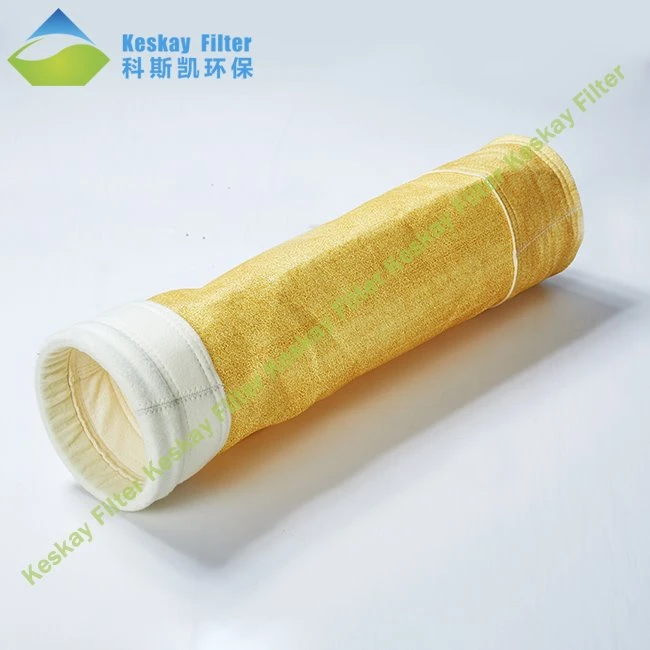

Binders and coatings can improve the overall performance of the filter bag, but they also need to be carefully selected to ensure they don't interfere with the antistatic properties. For example, a coating that's too thick or too insulating can prevent the antistatic agents from working effectively.
Conclusion
So, there you have it! That's a breakdown of the chemical composition of antistatic filter bags. As a supplier, I know how important it is to choose the right materials and agents to ensure the filter bags perform at their best. Whether you're dealing with fine dust, high temperatures, or chemical corrosion, there's an antistatic filter bag out there that's right for your application.
If you're in the market for antistatic filter bags, I'd love to have a chat with you. We can discuss your specific needs and find the perfect solution for your business. Don't hesitate to reach out and start a conversation about your procurement requirements.
References
- "Handbook of Filter Media" by Klaus Löffler
- "Industrial Filtration for Process Applications" by David W. Cooper